






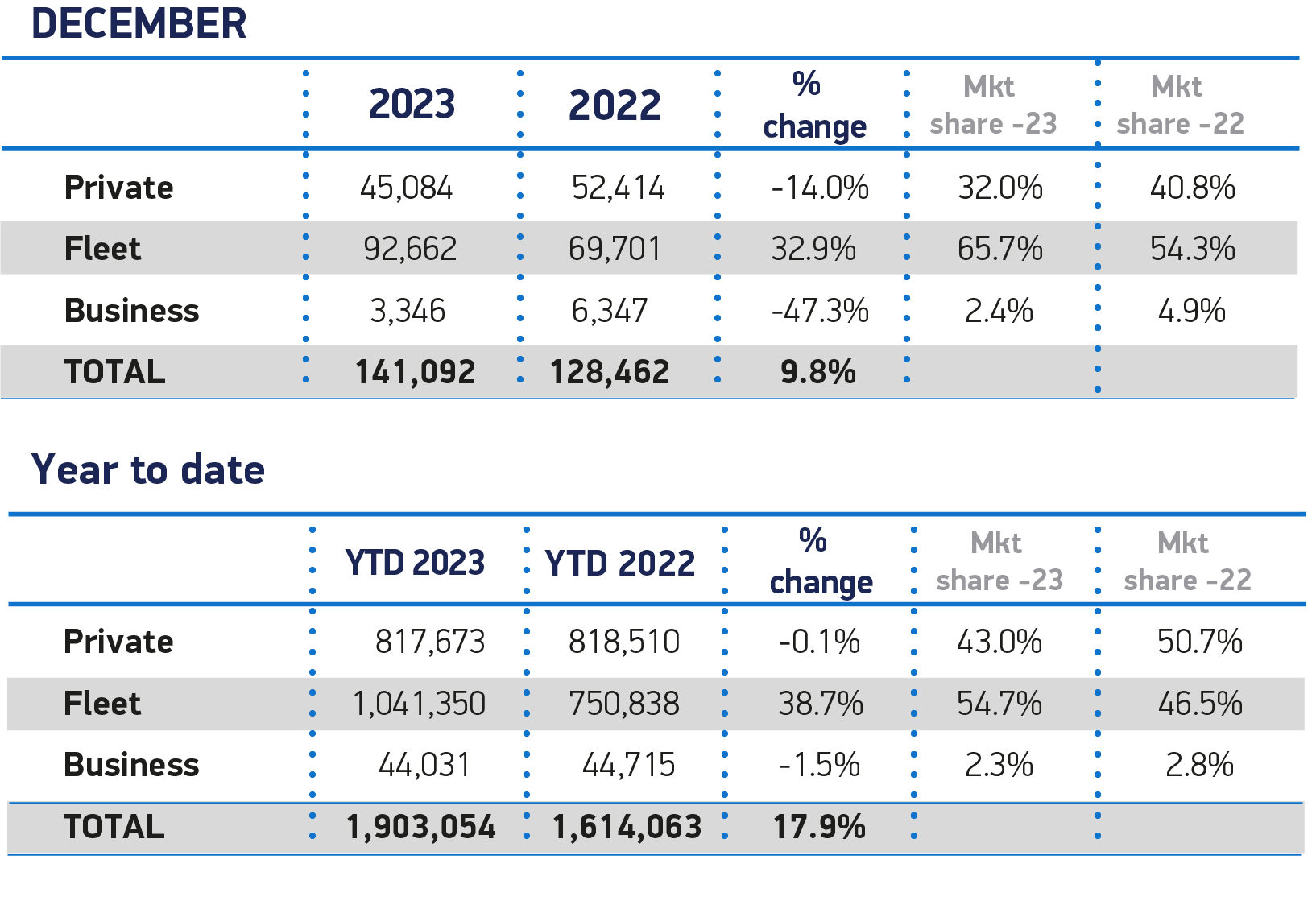
The UK automotive industry has witnessed its most successful year in new car sales since the pandemic, with 1.9 million new cars registered in 2023, a 17.9% increase from 2022. This surge marks the highest sales figures since 2019's 2.3 million registrations, as reported by the Society of Motor Manufacturers and Traders (SMMT). As we reported last year, the UK is on track to register over 400,000 new EVs in 2024, with even larger numbers to follow in the up-coming years.
Last year saw 315,000 battery electric vehicles being registered, which is 50,000 units more than in 2022. Despite this increase, EVs accounted for 16.5% of the total market, which is almost identical to the previous year's figure. The fleet sector, in particular, has shown significant growth in EV adoption, with 242,235 fully electric vehicles registered from a fleet total of just over 1 million – marking an increase of just under 40% compared to the previous year.
Rob Buckland, Chief Sales Officer at Gridserve Car Leasing, emphasised the impact of salary sacrifice schemes on EV uptake. With Benefit-In-Kind tax rates for electric vehicles frozen at just 2% until 2025 and various employee incentives, there's been a notable shift towards leasing electric cars through company schemes. This trend has been echoed by the fact that one in every six new cars registered in the UK is now fully electric, with the Tesla Model Y ranking as the fifth most popular car overall.
Industry analysts have noted a slowdown in EV registrations towards the end of 2023, possibly in anticipation of the UK Government's Zero Emissions Vehicle (ZEV) mandate. Effective from 3 January 2024, this mandate requires that 22% of all vehicles sold by carmakers be fully electric in 2024, increasing to 28% in 2025. Non-compliance could result in significant fines or the necessity to trade allowances with manufacturers who meet the targets.
The electric mobility industry in the UK is at a turning point. While there has been remarkable sales growth in the passenger and commercial vehicle sectors, the second half of 2023 saw a slowing of growth. This coincides with the Government's decision to delay the ICE sales ban from 2030 to 2035. The potential supply chain issues with lithium-ion batteries, which are crucial for EV manufacturing, are a concern. Analysts are predicting that a global lithium-ion shortage could emerge as early as 2025 – as new mining/extraction operations come on line, both in the UK and abroad.
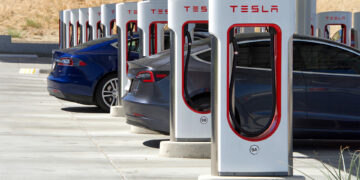
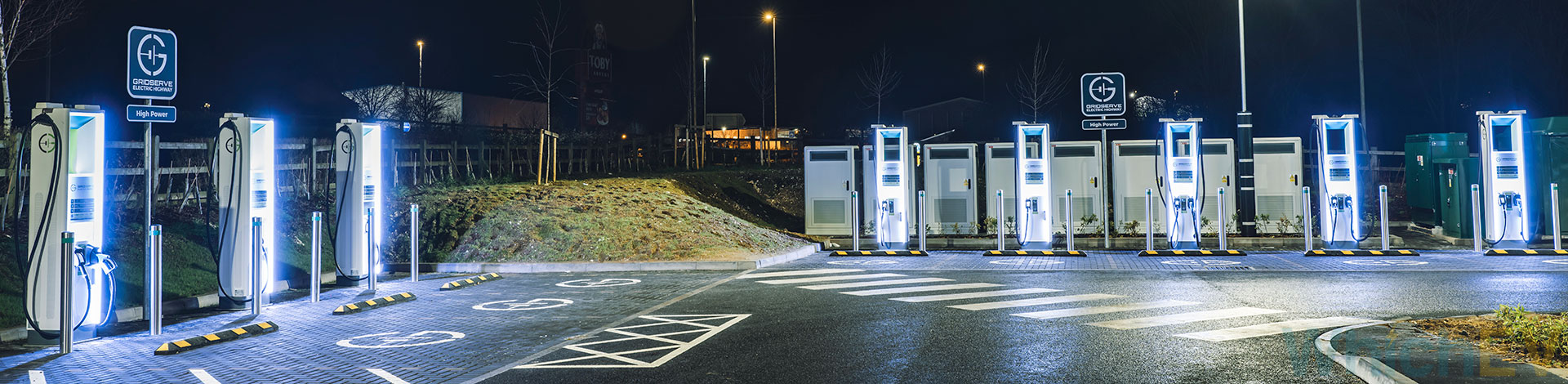
Another challenge is the underdeveloped EV charging infrastructure. Despite improvements, the installation of charging stations is lagging behind the 2030 target of 300,000, with fewer than 45,000 public charging points currently available across the UK. This shortfall raises questions about the mainstream adoption of EVs, especially among commercial fleet owners who view the shift to electrification as a substantial logistical and financial undertaking.
Nevertheless, early adopters in the fleet sector are starting to realise the competitive advantages of EVs. Electrification and its associated digitisation are reducing energy and maintenance costs, thus improving efficiency and profitability compared to traditional diesel fleets. With the ZEV mandate coming into effect, manufacturers of electric light commercial vehicles (e-LCVs) are compelled to increase sales of electric vans or face potential fines. This mandate is expected to significantly boost e-van sales in 2024 and beyond.
Technological advancements are playing a crucial role in facilitating fleet electrification. Fleet managers are increasingly utilising platforms and technologies that provide real-time data insights from telematics, energy usage, and operational patterns, enabling more informed decisions about vehicle transition and phasing. Moreover, there's growing interest in electrification-as-a-service models, which shift the investment from capital expenditure to operational expenditure, easing the financial burden on fleet owners.
Governments and regulatory bodies are urged to continue their efforts to ensure adequate charging infrastructure for all EVs, including heavy-duty commercial vehicles. Incorporating renewable energy sources like solar power and battery storage could help reduce grid demand and provide a more stable power supply.
Local authorities across the UK are increasingly adopting fleet electrification, driven by declarations of climate emergencies and funding initiatives like Zebra2 (Zero Emission Bus Regional Area) and ScotZeb2 (similar programme, but in Scotland) for electric buses. As fleet emissions account for 10% of the UK's total carbon emissions, electrification is becoming a priority.
For fleet operators transitioning to EVs, the focus in the coming year will be on effective energy management and cost control. This involves monitoring energy sources, calculating charging schedules, and training drivers for cost-effective operation. It's vital for fleet operators to tailor their EV fleets to their specific needs, avoiding over-specification which can lead to excessive expenditure.
Data analysis skills are becoming increasingly important in the fleet sector, with a growing demand for professionals who can manage and optimise fleet operations using robust data platforms. Fleet owners who invest in upskilling their teams in these areas will likely succeed in the evolving landscape of fleet management in 2024 and beyond.









Discussion about this post